

Investment Outlook: Second-Quarter 2019 - Income Inequality
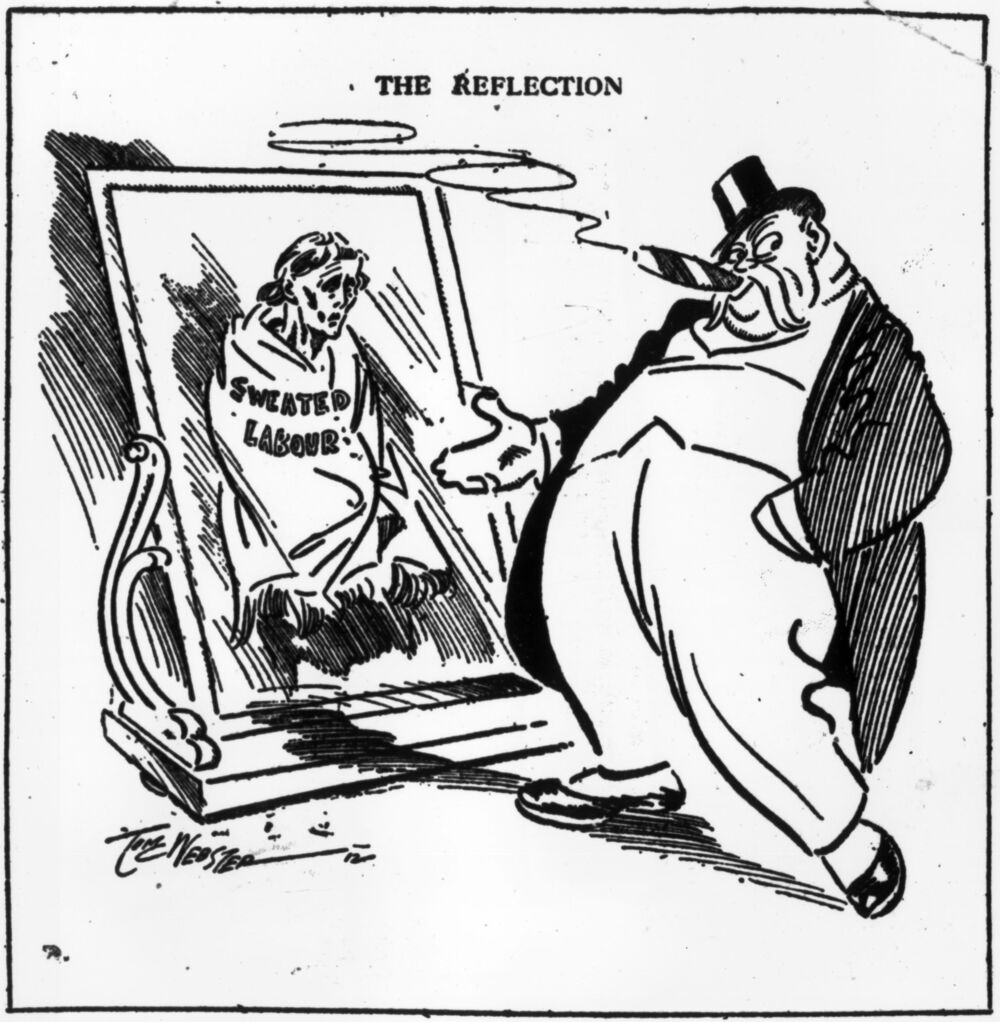
With the 2020 presidential campaign now underway, the issue of income inequality will undoubtedly become more prominent. This issue gained significance in 2013 when French economist Thomas Piketty published his bestselling book, “Capital in the 21st Century” (published in the USA in 2014). He argued that starting in the early 1970’s, the percentage of income going to the top 20%, 10%, and 1% had accelerated vastly. His prime reason for this was that the return on capital significantly exceeded the GDP growth rates in the developed countries but especially in the USA.
Here are three reasons that cast some doubt:
Measurements of inequality are typically that of “family income.” Dr. Charles Murray (economist/sociologist) noted in his 1994 book titled “The Bell Curve,” that IQ is a great predictor of income. Our IQs are reasonably close to that of our siblings, but much closer to that of our spouse’s. A good friend told me that his 1973 medical class had fewer than 10% women. His wife’s class, two years later, had over 40% women. Big change in the time when that “inequality” started to accelerate. The US economy started to make much more creative use of half of our talent.
Secondly, “income” is gross pretax dollars. Is this truly “income?” Would it make more sense to measure inequality by the dollars that we actually take-home? Also, should government grants be included to those parts of the population that receive them?
Lastly, this June the Wall Street Journal quoted a study by Dr. Hirschl and Dr. Rank that “found by age 60, more than half the population occupied the top 10% of the population for at least one year, and 11% made it to the top 1% for that length of time. But only 0.6% remained at the highest level for 10 consecutive years, and less than 7% remained in the top 10% for that long.”
Past performance is not indicative of future results. The material above has been provided for informational purposes only and is not intended as legal or investment advice or a recommendation of any particular security or strategy. The investment strategy and themes discussed herein may be unsuitable for investors depending on their specific investment objectives and financial situation. Information obtained from third-party sources is believed to be reliable though its accuracy is not guaranteed, Beese Fulmer Private Wealth Management ("Beese Fulmer") makes no representation or warranty as to the accuracy or completeness of the information, which should not be used as the basis of any investment decision. Information contained on third-party websites that Beese Fulmer may link to is not reviewed in their entirety for accuracy and Beese Fulmer assumes no liability for the information contained on these websites. Opinions expressed in this commentary reflect subjective judgments of the author based on conditions at the time of writing and are subject to change without notice. No part of this material may be reproduced in any form, or referred to in any other publication, without express written permission from Beese Fulmer. For more information about Beese Fulmer, including our Form ADV brochures, please visit https://adviserinfo.sec.gov and search for our firm name.