

Investment Outlook: Second-Quarter 2019 - China, China, China
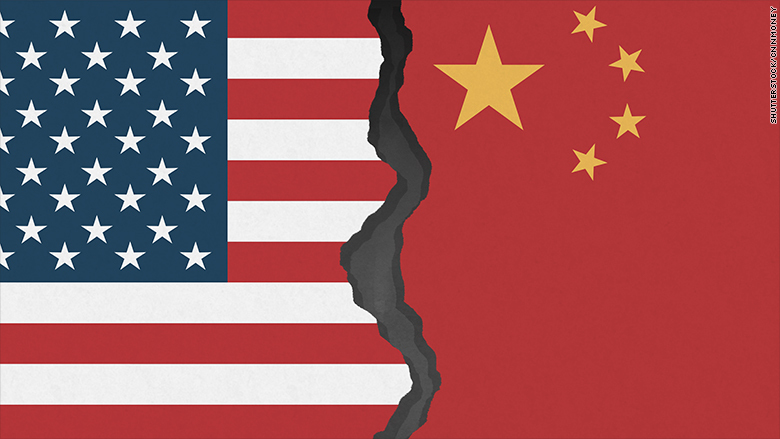
It seems like uncertainty around a trade war with China is a top business story on an almost-daily basis. Before there were fears of a trade war, the story was about a potential slowdown in the Chinese economy or a potential Chinese credit bubble. So, why are we so worried about China?
While some reasons may seem obvious, it is import to remind and clarify for ourselves why we worry so much about China and why they’re such an important part of the global economy. According to the World Bank, China is the most populous nation, with nearly 1.4 billion people; followed by India and then the United States with a population of 325 million. Economic production as measured by GDP tells a slightly different story, the United states is still the largest economy on the planet with a GDP of $21.3 trillion, compared to that of second-place China with a GDP of $14.2 trillion (as reported by the International Monetary Fund). If the GDP for the world is roughly $88 trillion, that means the United States accounts for nearly 25% of the global GDP and China accounts for more than 16%. One clear takeaway from these GDP numbers is - as the United States and Chinese economies go, so goes the global economy.
Another key data point to keep in mind is the speed at which these economies grow. While economists differ in their estimates, a middle of the road assumption is that the United States economy grows at 2.5% for the foreseeable future and China grows at 6% over the same period. This means that China is on pace to become the world’s largest economy in about 13 years.
There is no doubt that when the world’s two largest economies are locked in a rather tenuous trade negotiation and have already implemented significant tariffs on each other’s goods, everyone suffers. On a global basis, it’s in the best interest of the global economy for these two countries to make a deal and make trade between countries as free as possible.
When examining the affects and repercussions of a trade war at the country level, the clear-cut answers begin to fade away. Many economists believe that the United States has more leverage in the trade negotiation with China. This makes sense for a few reasons, starting with the fact that United States imports far more goods from China than it exports to China. In 2018, The United States imported nearly $540 billion from China, while it exporting about $120 billion. Why is this important? For two reasons. The first is we have more imports from China to tax if we choose to do so. The second is that China will have a much harder time finding buyers for all the goods they sell to the United States than the United States will finding a buyer for their goods.
The second reason we are in a position of strength when negotiating trade has to do with the health of our economy. The United States economy is much healthier than that of China. Even though China’s economy is growing faster, there are far more issues percolating under the surface. In the near-term, a trade war hurts both countries—but it is far more likely that the United States can emerge as victor in this dispute. Over the long run, this is likely to be very positive for our country and economy.
Past performance is not indicative of future results. The material above has been provided for informational purposes only and is not intended as legal or investment advice or a recommendation of any particular security or strategy. The investment strategy and themes discussed herein may be unsuitable for investors depending on their specific investment objectives and financial situation. Information obtained from third-party sources is believed to be reliable though its accuracy is not guaranteed, Beese Fulmer Private Wealth Management ("Beese Fulmer") makes no representation or warranty as to the accuracy or completeness of the information, which should not be used as the basis of any investment decision. Information contained on third-party websites that Beese Fulmer may link to is not reviewed in their entirety for accuracy and Beese Fulmer assumes no liability for the information contained on these websites. Opinions expressed in this commentary reflect subjective judgments of the author based on conditions at the time of writing and are subject to change without notice. No part of this material may be reproduced in any form, or referred to in any other publication, without express written permission from Beese Fulmer. For more information about Beese Fulmer, including our Form ADV brochures, please visit https://adviserinfo.sec.gov and search for our firm name.